
- Details
- Hits: 981
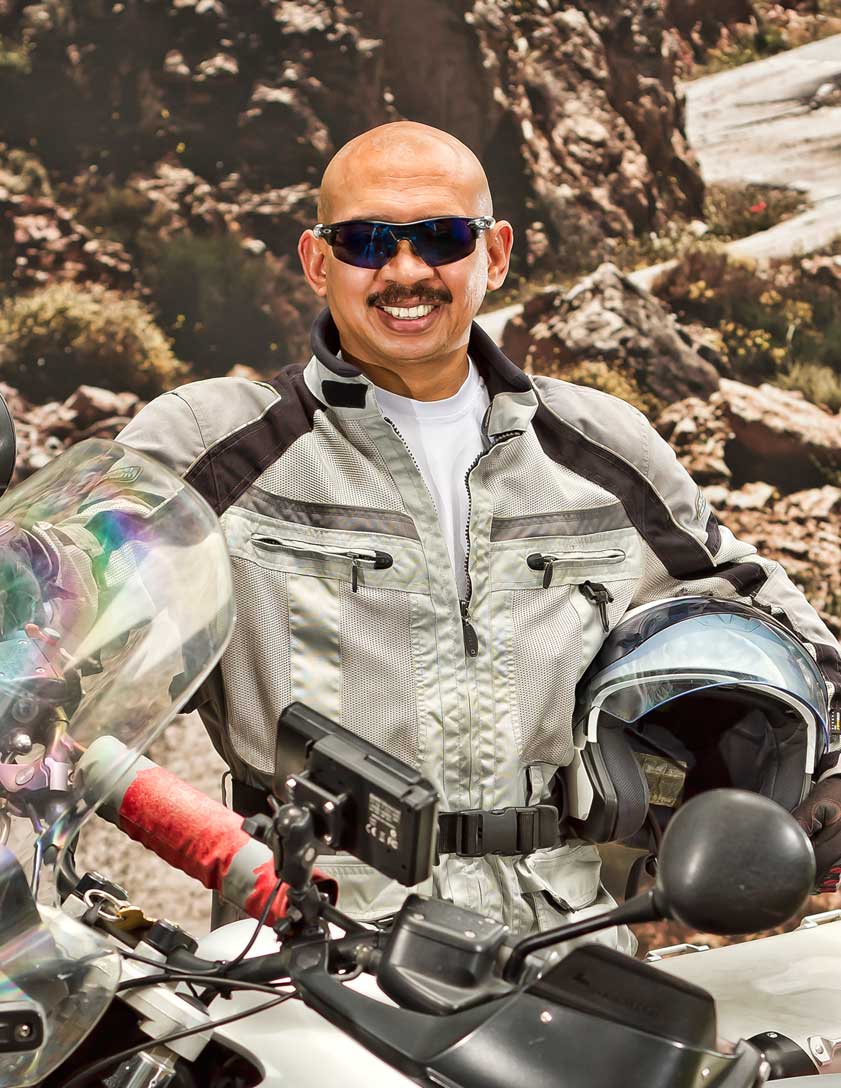
- Description: Jeffrey Polnaja is an Indonesian adventurer, motorcyclist and author - the first Indonesian to complete a solo motorcycle circumnavigation of the world. Inspired by his son's question after the September 11, 2001 attacks about why there was so much conflict in the world, he sold his company and on 23 April 2006 departed Jakarta on a BMW R1150GS Adventure named "Maesa Adventure" on his "Ride for Peace" mission. The journey spanned Asia, North Africa, Europe, Siberia, North America, Central and South America, and Australia, covering 99 countries across all continents, with 97 reached via continuous overland travel. The journey lasted until September 2015, covering approximately 420,000 km. During the trip his motorcycle was stolen in Amsterdam, he was hit by a truck and hospitalised - doctors initially said he would never walk again - and was shot at in conflict zones. His second motorcycle was named "Silver Line"
- Alias-Pseudonimo-Pseudonyme: -
- Nationality-Nazionalità-Nationalité: Indonesia
- Birth/death-Nascita/morte-Naissance/mort: -
- Means of transport-Mezzo di trasporto-Moyen de transport: Motorbike, Motocicletta, Moto
- Geographical description-Riferimento geografico-Référence géographique: Around the World, Giro del mondo, Tour du monde
- Internet: https://jeffrey-polnaja.com
- Wikidata: https://www.wikidata.org/wiki/Q19692047
- Additional references-Riferimenti complementari-Références complémentaires: Polnaja, Jeffrey; Khalida, Laura. Wind Rider. Jakarta: Qanita, 2011.

- Details
- Hits: 1022
- Description: Peggy Iris Thomas was a British motorcyclist and writer from Liverpool. In 1950 she purchased a BSA D1 Bantam 125 cc which she named "Oppy". In spring 1951 she sailed to Canada and began a solo motorcycle journey through Canada, the United States and Mexico, accompanied by her Airedale dog Matelot, who rode in a box fitted to the carrier. Starting with only $60 in her pocket, she covered 22,530 km (14,000 miles) over two years, working along the way as an office worker, apple picker and factory labourer to fund the trip. Her route included Nova Scotia, the Canadian Rockies, the Pacific coast, Mexico and the eastern seaboard up to New York. She is described as "the queen of long-distance Bantamites" by Peter Henshaw in The BSA Bantam Bible. She recounted her journey in Gasoline Gypsy, published in the United States in 1953 and in the UK in 1954 as A Ride in the Sun
- Alias-Pseudonimo-Pseudonyme: Gasoline Gypsy
- Nationality-Nazionalità-Nationalité: UK, Inglese, Anglais
- Birth/death-Nascita/morte-Naissance/mort: -
- Means of transport-Mezzo di trasporto-Moyen de transport: Motorbike, Motocicletta, Moto
- Geographical description-Riferimento geografico-Référence géographique: Americas, Americhe, Amérique
- Additional references-Riferimenti complementari-Références complémentaires: Thomas, Peggy Iris. Gasoline Gypsy; A Ride in the Sun. London: Travel Book Club, 1954.
- Details
- Hits: 1142
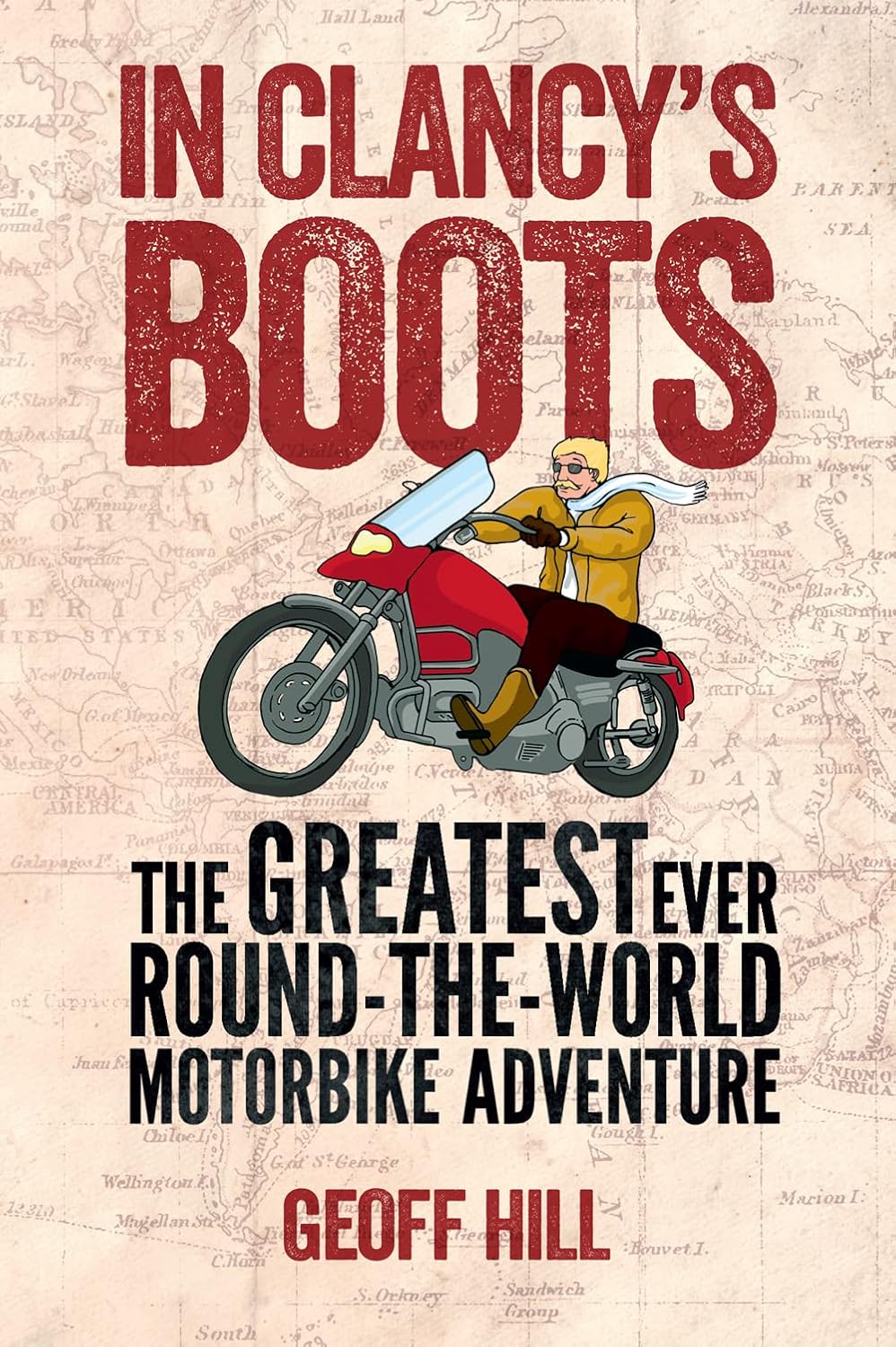
- Description: Geoff Hill is a British author, journalist and long-distance motorcyclist based in Belfast. He is a multiple award-winning travel writer, having been nominated or shortlisted for UK Travel Writer of the Year nine times, and is a three-time Northern Ireland Features Journalist of the Year. His motorcycle journeys include Delhi to Belfast on a Royal Enfield; Route 66 on a Harley-Davidson; Chile to Alaska via the 26,550 km (16,500 miles) Pan-American Highway; a circumnavigation of Australia on a Triumph along Highway 1; and a centenary recreation of Carl Stearns Clancy's 1912-1913 first-ever motorcycle circumnavigation of the world, for which he carried Clancy's original boots, diaries and pith helmet
- Alias-Pseudonimo-Pseudonyme: -
- Nationality-Nazionalità-Nationalité: UK, Britannico, Britannique
- Birth/death-Nascita/morte-Naissance/mort: -
- Means of transport-Mezzo di trasporto-Moyen de transport: Motorbike, Motocicletta, Moto
- Geographical description-Riferimento geografico-Référence géographique: Around the World, Giro del mondo, Tour du monde
- Internet: https://en.wikipedia.org/wiki/Geoff_Hill_(Northern_Ireland_journalist)
- Wikidata: https://www.wikidata.org/wiki/Q21008756
- Additional references-Riferimenti complementari-Références complémentaires: Hill, Geoff. Way to Go: Two of the World's Great Motorcycle Journeys. Belfast: Blackstaff Press, 2005. Hill, Geoff. The Road to Gobblers Knob: From Chile to Alaska on a Motorbike. Belfast: Blackstaff Press, 2007. Hill, Geoff. In Clancy's Boots: The Greatest Ever Round-the-World Motorbike Adventure. Belfast: Blackstaff Press, 2014.
- Details
- Hits: 1299
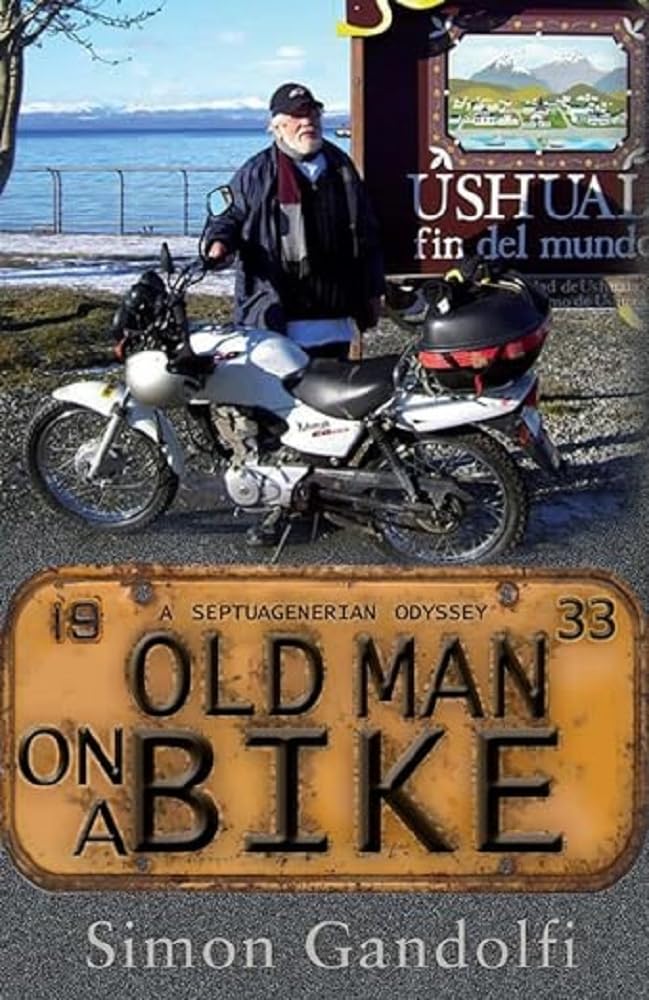
- Description: Simon Gandolfi is an English writer and long-distance motorcyclist who has covered over 110,000 km (68,000 miles) on solo, unsupported rides across the Americas and India, all on small 125 cc motorcycles. Between 2007 and 2008, at the age of 73, he rode from Mexico to Tierra del Fuego via Central and South America - 34,000 km (21,000 miles) - on a 125 cc Honda. Between April and December 2009 he completed the return journey from Tierra del Fuego to New York - 46,000 km (29,000 miles) - on the same motorcycle. He subsequently rode across India twice: 18,000 km (11,000 miles) in 2010-2011 on a Honda Stunner 125, and 16,000 km (9,900 miles) in 2013 around his 80th birthday on a TVS Phoenix 125
- Alias-Pseudonimo-Pseudonyme: -
- Nationality-Nazionalità-Nationalité: UK, Britannico, Britannique
- Birth/death-Nascita/morte-Naissance/mort: -
- Means of transport-Mezzo di trasporto-Moyen de transport: Motorbike, Motocicletta, Moto
- Geographical description-Riferimento geografico-Référence géographique: Various, Diversi, Différents
- Internet: https://en.wikipedia.org/wiki/Simon_Gandolfi
- Wikidata: https://www.wikidata.org/wiki/Q20631094
- Additional references-Riferimenti complementari-Références complémentaires: Gandolfi, Simon. Old Man on a Bike. HarperCollins, 2008. Gandolfi, Simon. Old Men Can't Wait. Shuvvy Press, 2011.
- Details
- Hits: 1235
- Description: Austin Vince is a British mathematics teacher, filmmaker and adventure motorcyclist. In 1995-1996 he took part in Mondo Enduro, a round-the-world motorcycle expedition on Suzuki DR350 dual-sport bikes, alongside his brother Gerald Vince and five other riders. The route went from London through Central Asia, Kazakhstan and Siberia, then from Alaska to Chile and finally from Cape Town through Africa and the Middle East back to London. The greatest challenge was the Zilov Gap, a 650 km roadless section in Siberia; the team eventually used the Trans-Siberian railway to bypass the final 160 km. The expedition was filmed and broadcast as a two-part TV series on Discovery Travel and Adventure Channel. In 2000 he participated in Terra Circa, a follow-up expedition that became the first to cross the Zilov Gap by motorcycle. The route went from London via Siberia to Vladivostok, then Japan and the United States, covering 32,000 km (20,000 miles) in 7 months. Both expeditions are credited with helping to launch the modern adventure motorcycling movement
- Alias-Pseudonimo-Pseudonyme: Mondo Enduro
- Nationality-Nazionalità-Nationalité: UK, Inglese, Anglais
- Birth/death-Nascita/morte-Naissance/mort: -
- Means of transport-Mezzo di trasporto-Moyen de transport: Motorbike, Motocicletta, Moto
- Geographical description-Riferimento geografico-Référence géographique: Around the World, Giro del mondo, Tour du monde
- Internet: https://austinvince.com
- Wikidata: https://www.wikidata.org/wiki/Q4823321
- Additional references-Riferimenti complementari-Références complémentaires: Vince, Austin et al. Mondo Enduro. Ripping Yarns, 2006.
- Details
- Hits: 1213
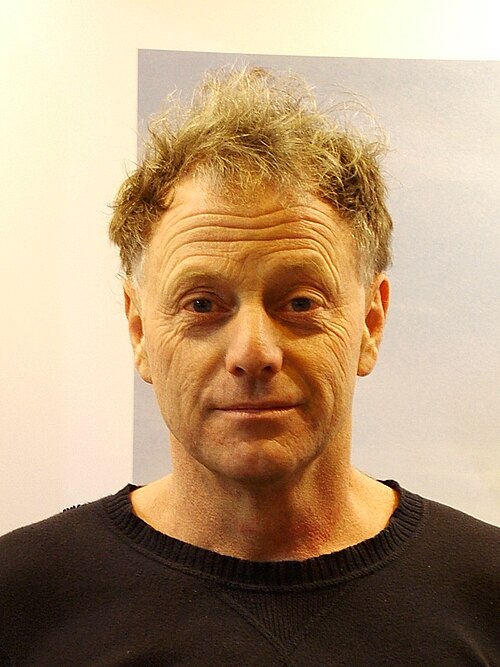
- Description: Nicholas Mark Sanders MBE is a British cyclist, motorcyclist and author who has ridden around the world seven times. In 1981 he set the original world cycling circumnavigation record, covering 21,900 km (13,609 miles) in 138 days. In 1984 he repeated the feat in 79 days over approximately 22,000 km. On 9 June 1997 he completed a Guinness-certified motorcycle circumnavigation of 32,070 km (19,930 miles) in 31 days and 20 hours on a Triumph Daytona. He held the Guinness World Record for the fastest motorcycle circumnavigation from 1997 to 2002, when it was broken by Kevin and Julia Sanders. In 2005 he completed a second motorcycle circumnavigation in 19 days and 4 hours on a Yamaha R1 - however, Guinness had ceased certifying such attempts after 2002, meaning the official Guinness World Record remains that set by Kevin and Julia Sanders. In 2011 he became the first person to ride from Alaska to Tierra del Fuego and back in under 49 days and 17 hours on a Yamaha XT1200Z Super Ténéré. In 2024 he became the first person to circumnavigate the globe by electric bicycle. He also holds the Guinness World Record for the fastest ride around the coast of Great Britain: 7,720 km (4,800 miles) in 22 days
- Alias-Pseudonimo-Pseudonyme: -
- Nationality-Nazionalità-Nationalité: UK, Inglese, Anglais
- Birth/death-Nascita/morte-Naissance/mort: -
- Means of transport-Mezzo di trasporto-Moyen de transport: Motorbike, Motocicletta, Moto
- Geographical description-Riferimento geografico-Référence géographique: Around the World, Giro del mondo, Tour du monde
- Internet: https://www.nicksanders.com
- Multimedia: https://www.youtube.com/c/nicksanderscinema
- Wikidata: https://www.wikidata.org/wiki/Q7027870
- Additional references-Riferimenti complementari-Références complémentaires: Sanders, Nick. Fastest Man Around the World. On the Road, 1999. Sanders, Nick. Loneliness of the Long Distance Biker. On the Road, 2004.
- Details
- Hits: 1224
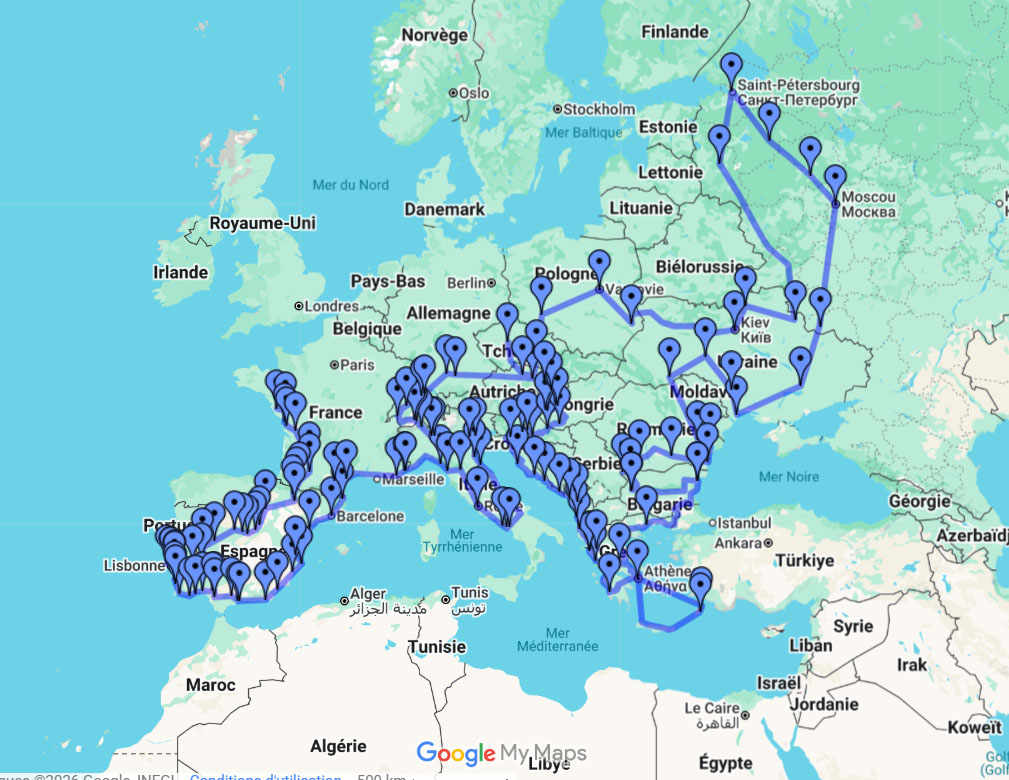
- Description: Benoît Denieulle is a French electronics technician and long-distance moped traveller. From 1 April to 6 December 2007 he completed a tour of Europe covering 27,280 km (16,950 miles) across 20 countries on a 1979 Motobécane moped, until his moped was stolen in Prague, forcing him to stop. In 2009 he resumed the journey, completing his European tour via the United Kingdom and Ireland before crossing to North America; the 2009 leg covered 33,086 km in 226 days. His journeys are considered, in the absence of official recognition, to have exceeded the distance record for a long-distance journey on an unmodified true moped previously set by Walter Muma in 1978
- Alias-Pseudonimo-Pseudonyme: Deniol
- Nationality-Nazionalità-Nationalité: France, Francia
- Birth/death-Nascita/morte-Naissance/mort: -
- Means of transport-Mezzo di trasporto-Moyen de transport: Moped, Motorino, Cyclomoteur
- Geographical description-Riferimento geografico-Référence géographique: Europe, Europa
- Internet: https://www.google.com/maps/d/viewer?oe=UTF-8&hl=fr&ie=UTF8&msa=0&z=4&om=1&mid=1PE_6Au8CsmMz6jMLnQcdhxw_7iU&ll=49.057666532861155%2C14.116602
- Multimedia: https://www.youtube.com/@deniolmob
- Details
- Hits: 1269
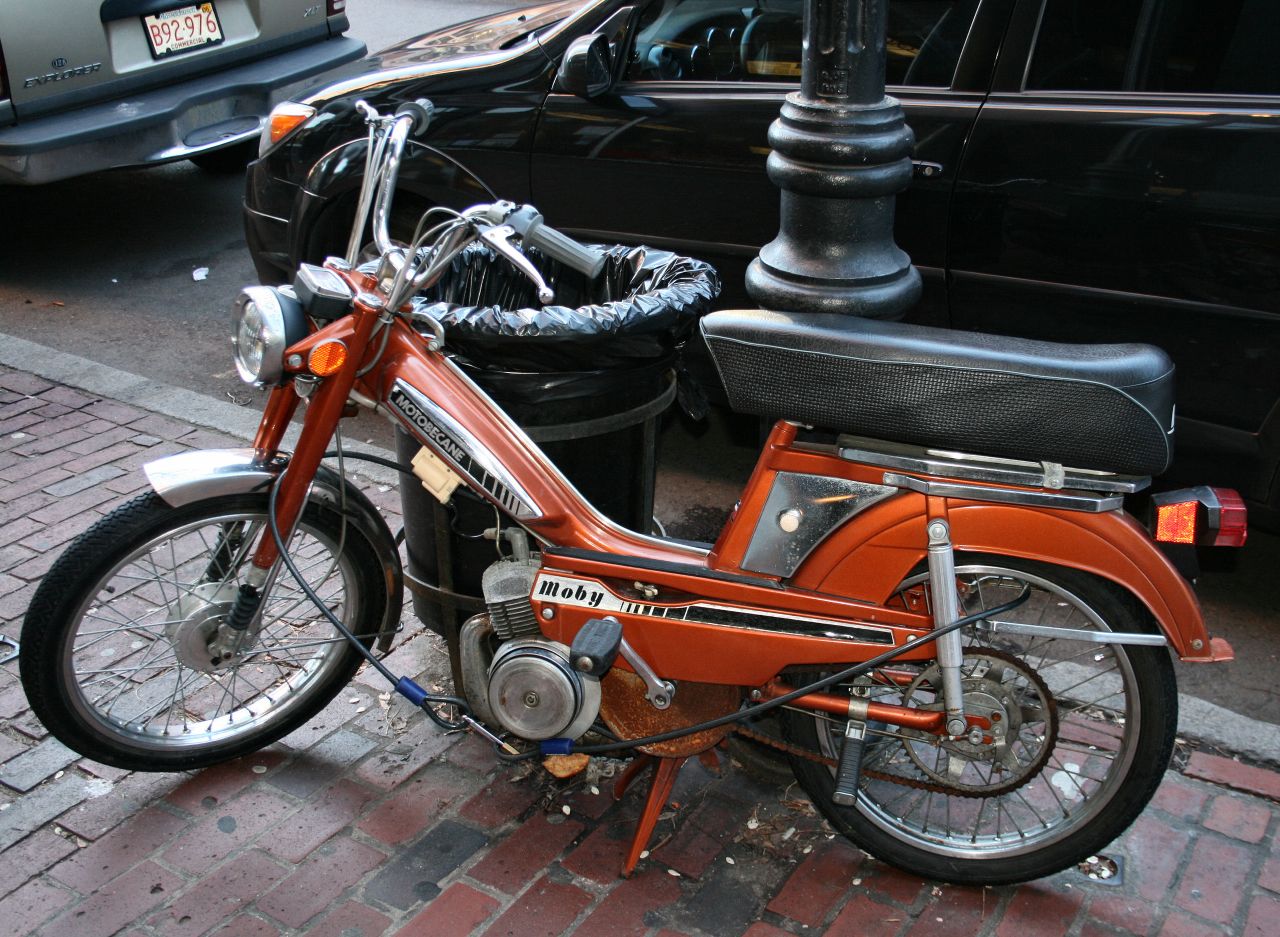
- Description: Walter Muma completed a 3-month, 18,660 km (11,500 miles) journey across Canada and Alaska by moped in the summer of 1978. He rode a yellow 1978 Motobécane Mobylette 50v - a 49 cc, 2.5 horsepower, two-stroke engine capable of 25-30 mph and 150 miles per gallon - departing Toronto on 3 June and returning on 7 September 1978. His route followed the Trans-Canada Highway westward, the Alaska Highway from Dawson Creek through the Rocky Mountains to Yukon and Alaska, side trips to Inuvik in the Northwest Territories and Eagle, Alaska, and back via the Stewart-Cassiar and Yellowhead Highways. He carried approximately 22 kg (50 lbs) of gear including a tent, tools and spare parts. His stated motivation was to see the rapidly changing northern landscape before industrial development transformed it
- Alias-Pseudonimo-Pseudonyme: -
- Nationality-Nazionalità-Nationalité: Canada
- Birth/death-Nascita/morte-Naissance/mort: -
- Means of transport-Mezzo di trasporto-Moyen de transport: Moped, Motorino, Cyclomoteur
- Geographical description-Riferimento geografico-Référence géographique: Americas, Americhe, Amérique
- Internet: https://mopedtrip.com
- Wikidata: https://www.wikidata.org/wiki/Q7965689
- Details
- Hits: 1179
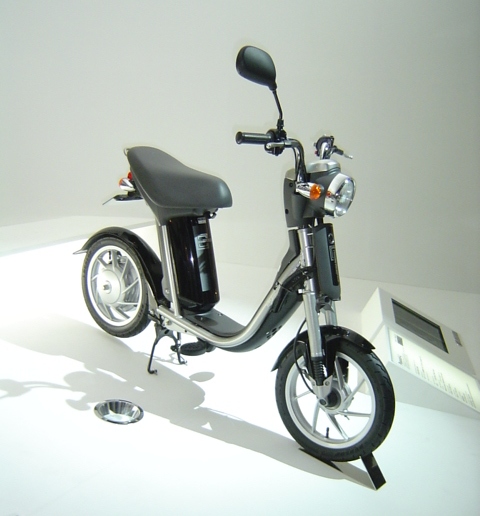
- Description: Kanichi Fujiwara is a Japanese long-distance motorcyclist and writer. Between May 1987 and August 1999 he travelled across several continents on small motorcycles including a Honda Super Cub, a 50 cc Honda Motra and a Honda Dio scooter. Between March 2004 and May 2008 he completed a 50,552 km (31,412 miles) circumnavigation of the world on a Yamaha Passol electric scooter across 44 countries, on a route including Australia (Sydney to Perth), Thailand, India to Lisbon, South Africa to Kenya, and the United States (New York to San Francisco). The Yamaha Passol weighed 45 kg, had a top speed of 30 km/h and a range of 20 km per charge; with six batteries the range reached 100 km. The journey is considered possibly the first global circumnavigation by electric two-wheeler. Between April 2009 and November 2013 he rode 100,000 km across Japan's major highways on a 50 cc Honda Cub
- Alias-Pseudonimo-Pseudonyme: -
- Nationality-Nazionalità-Nationalité: Japan, Giappone, Japon
- Birth/death-Nascita/morte-Naissance/mort: -
- Means of transport-Mezzo di trasporto-Moyen de transport: Moped, Motorino, Cyclomoteur
- Geographical description-Riferimento geografico-Référence géographique: Around the World, Giro del mondo, Tour du monde
- Internet: https://kanichi.com
- Wikidata: https://www.wikidata.org/wiki/Q15276096